
Owning a robot vacuum can save time and effort, but many UK buyers want to understand the real maintenance cost over time. Beyond the upfront price, robot vacuums require regular care and occasional replacement parts to keep performance consistent.
This guide explains typical robot vacuum maintenance costs in the UK, what parts wear out, and how much you should realistically budget each year.
What Does “Maintenance Cost” Mean for a Robot Vacuum?
Robot vacuum maintenance costs usually include:
- Replacement filters
- Side brushes and main brushes
- Occasional battery replacement
- Routine cleaning and upkeep
Unlike traditional vacuums, robot vacuums rely on consumable components that gradually wear out with regular use.
Average Robot Vacuum Maintenance Costs in the UK
Below are realistic cost ranges based on common UK pricing. These figures apply broadly across most robot vacuum models sold in the UK.
🔹 Replacement Filters
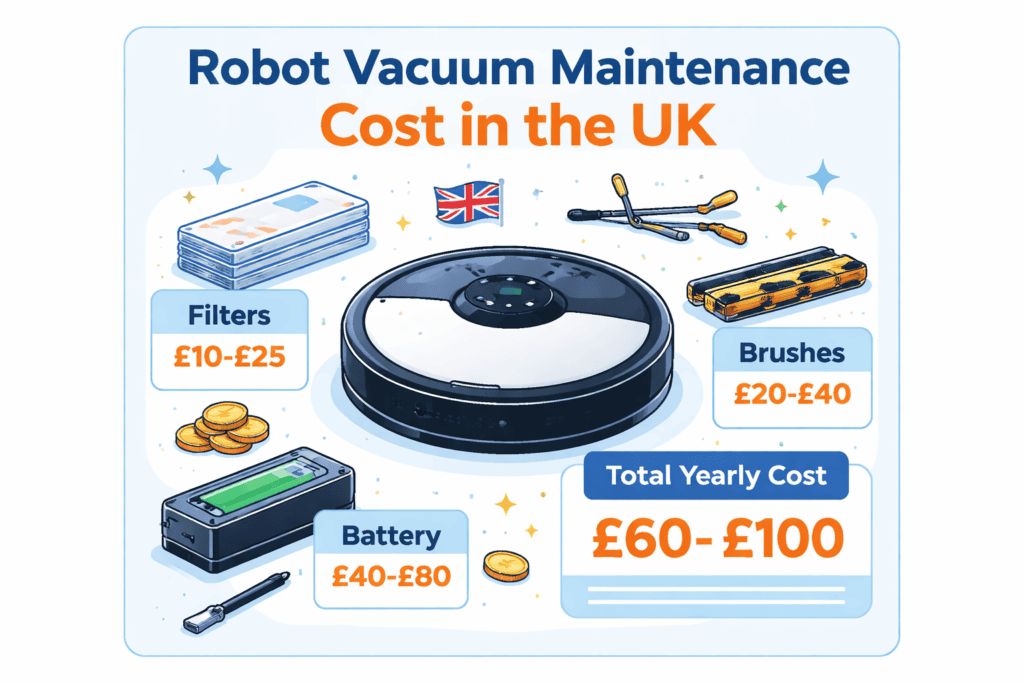
- Cost: £10–£25 per filter
- Replacement frequency: Every 2–4 months
- Estimated annual cost: £30–£75
Homes with pets or heavy carpet use usually need more frequent filter changes.
🔹 Side Brushes & Main Brush
- Side brushes: £5–£15 per set
- Main brush: £15–£30
- Replacement frequency: Every 6–12 months
- Estimated annual cost: £20–£40
Pet hair and carpet fibres are the main reasons brushes wear out faster.
🔹 Battery Replacement (Long-Term Cost)
- Typical lifespan: 2–4 years
- Replacement cost: £40–£80
- Annualised cost: £15–£30 per year
Most UK users won’t need to replace the battery during the first couple of years of ownership.
Estimated Total Maintenance Cost Per Year
| Household Type | Estimated Annual Cost |
|---|---|
| Small flat, no pets | £40–£60 |
| Average UK home | £60–£100 |
| Homes with pets | £80–£130 |
These costs remain fairly consistent across different brands and price ranges.
Is Robot Vacuum Maintenance Expensive Compared to Traditional Vacuums?
Compared to cordless or upright vacuums:
- Robot vacuums involve smaller but more frequent costs
- Repair costs are generally lower
- Most models do not require bags
For many households, long-term ownership costs are comparable—especially when daily automated cleaning is valued.
Maintenance costs can feel higher in homes with pets or heavy carpet use, mainly because filters and brushes wear out faster. This is why many UK buyers look for models with efficient suction and durable components that can help reduce long-term upkeep issues.
👉 Our detailed Lefant M2 Pro review for UK homes explains how this model handles maintenance and everyday wear in real-world use.
Do Maintenance Costs Vary by Brand?
In most cases, maintenance costs are similar across robot vacuum brands. Differences usually come down to:
- Cleaning frequency
- Floor type (carpet vs hard floors)
- Pet ownership
Mid-range models commonly use standard-style filters and brushes, meaning replacement costs stay within the same UK price ranges regardless of brand.
How to Reduce Robot Vacuum Maintenance Costs
You can keep maintenance costs lower by:
- Cleaning filters regularly between replacements
- Removing hair from brushes weekly
- Emptying the dustbin after each cleaning cycle
- Avoiding maximum suction unless necessary
Good maintenance habits can significantly extend the life of consumable parts.
Who Should Budget More for Maintenance?
You should expect higher annual maintenance costs if you:
- Own shedding pets
- Have wall-to-wall carpets
- Run the robot vacuum daily
- Live in a larger UK home
Understanding these factors helps set realistic expectations before choosing a robot vacuum.
👉 Read our full Lefant M2 Pro Review – Best Rated Robot Vacuum for UK Homes to see how maintenance considerations translate into daily use..
Final Thoughts
Robot vacuum maintenance costs in the UK are predictable and manageable.
Most households spend between £60–£100 per year, with higher costs mainly affecting pet owners and carpeted homes.
Knowing these ongoing expenses makes it easier to choose the right model—and avoid surprises later.
Affiliate Disclosure: This page contains affiliate links. As an Amazon Associate, we earn from qualifying purchases at no extra cost to you.